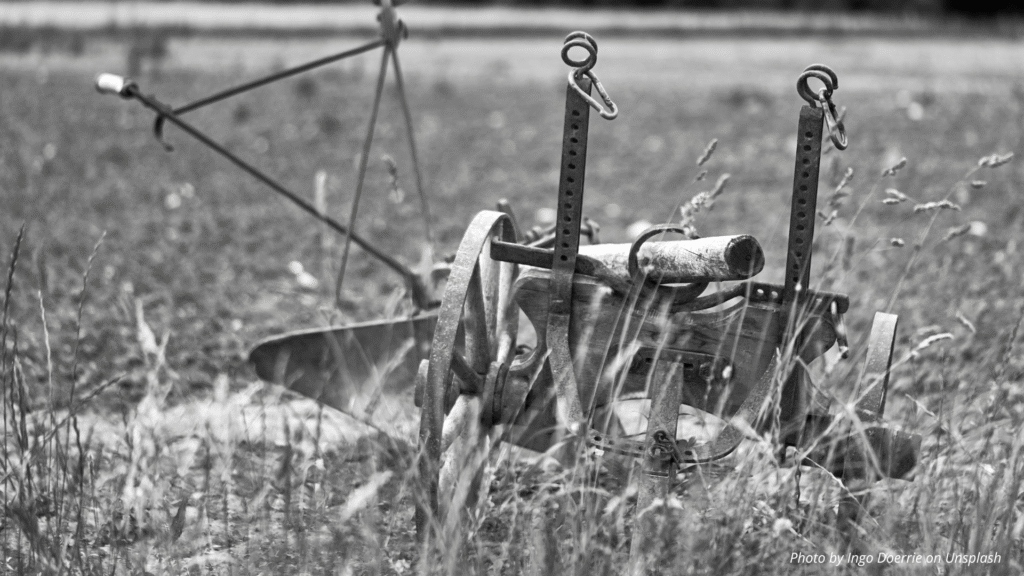
The Plough
adapted from “50 things that made the modern economy” by Tim Harford
Thousands of years ago, people lived as hunter-gatherers. They moved from place to place, foraging for food and following animals. But around 12,000 years ago, the world became hotter and drier, and many plants and animals started to disappear. People began to move towards river valleys, where there was more water and fertile soil. There, they started to grow food instead of just finding it.
At first, early farmers used simple sticks to break the soil, but later they invented a new tool — the plough. The first ploughs were pulled by animals such as cows. They helped people prepare the land faster and grow more food. Agriculture began to spread quickly, and human life changed forever.
Because the plough made food production easier, fewer people were needed on farms. Others could now learn new skills — such as baking, building, or crafting tools. This allowed villages and towns to grow and later became the foundation of civilisation. However, more food and land also created inequality. Some people became rich and powerful, while others worked hard for them. Rulers, soldiers, and priests appeared, and ordinary farmers had to give part of their harvest to them.
Over time, different ploughs were invented. The mouldboard plough, created first in China, could turn over the heavy, wet soil in northern Europe. It helped farmers produce even more food and led to the growth of new cities and communities. But this progress also brought social changes. The plough was heavy and difficult to use, so it became known as men’s work, while women stayed at home preparing food and caring for children.
Not all the effects of agriculture were positive. Early farmers often had a poorer diet than hunter-gatherers. They suffered from diseases and malnutrition because they ate mostly grain instead of a wide variety of foods. Some scientists even call the beginning of farming “the worst mistake in human history.”
Still, the plough gave humanity the chance to build societies, technology, and culture. It remains one of the inventions that truly changed the world.

Read the text and decide if these five statements are true or false.
Vocabulary task